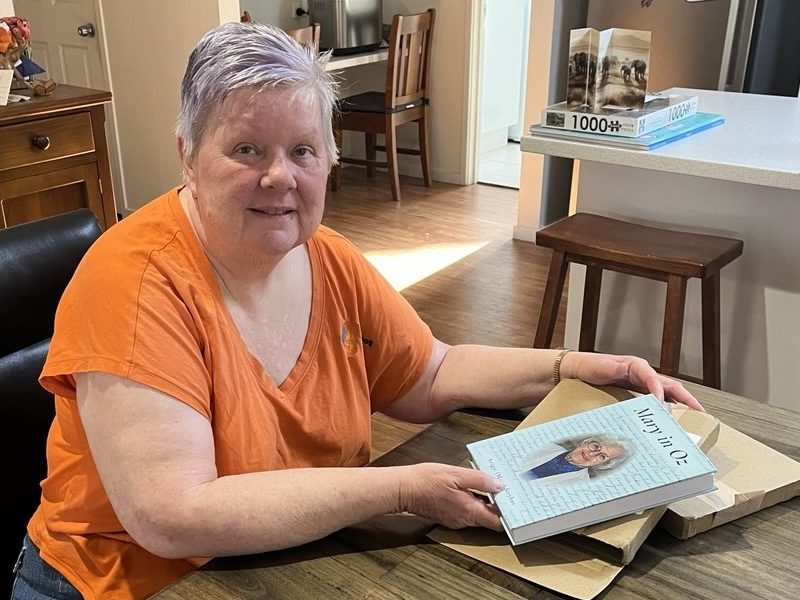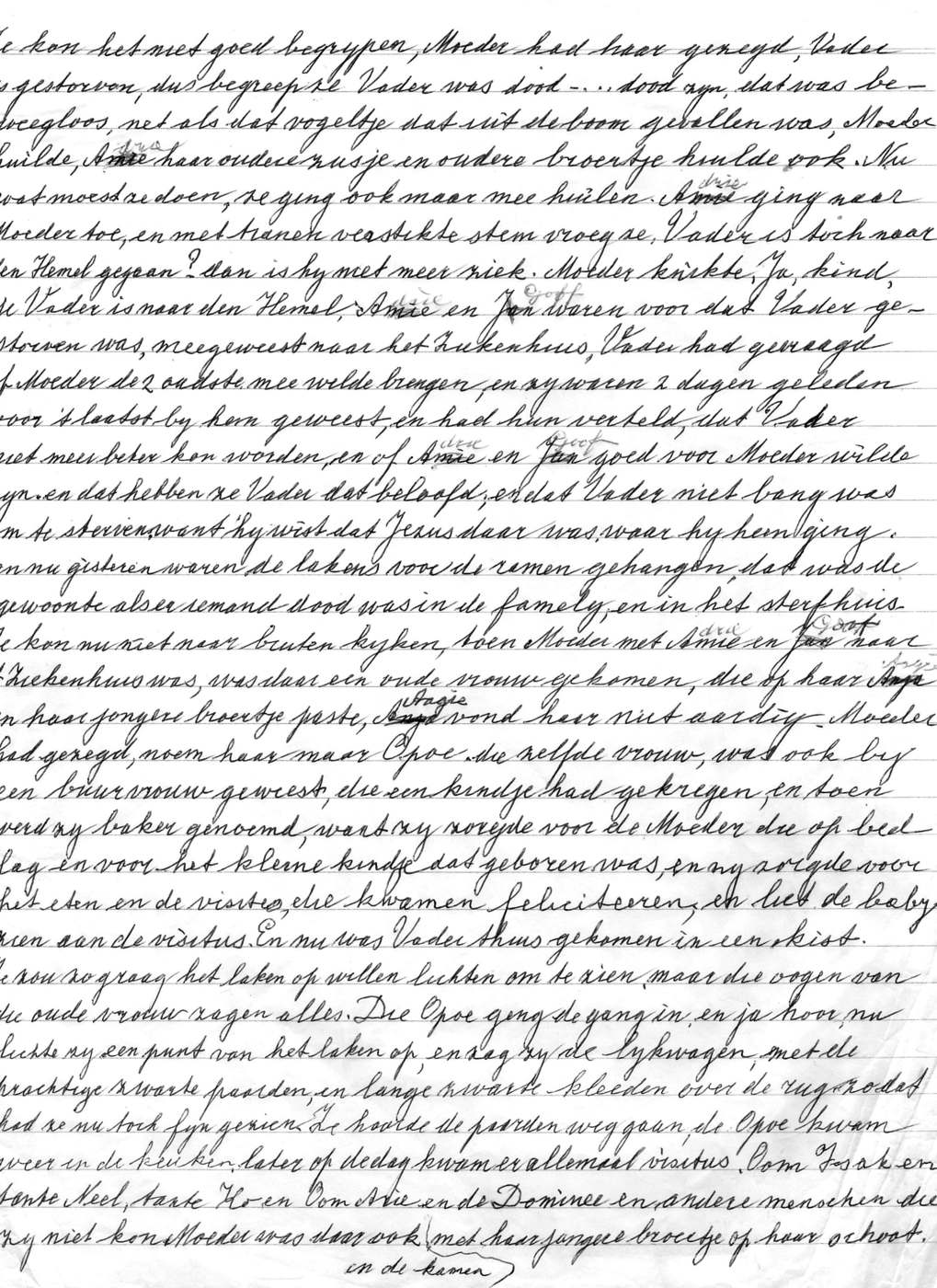
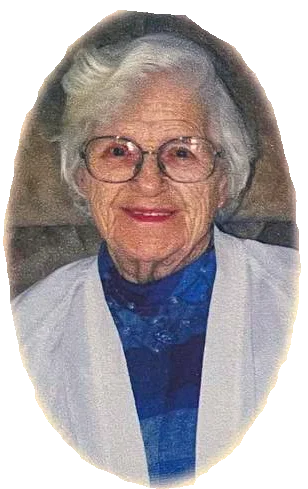
Mary set her life down by hand, in Dutch, and then went back to the beginning and wrote the whole of it again, at greater length: nearly five hundred sheets in all. It takes patience to write a life down, and a steadier kind of courage not to leave the hard parts out.
Turning her work into a book was made possible by four people.
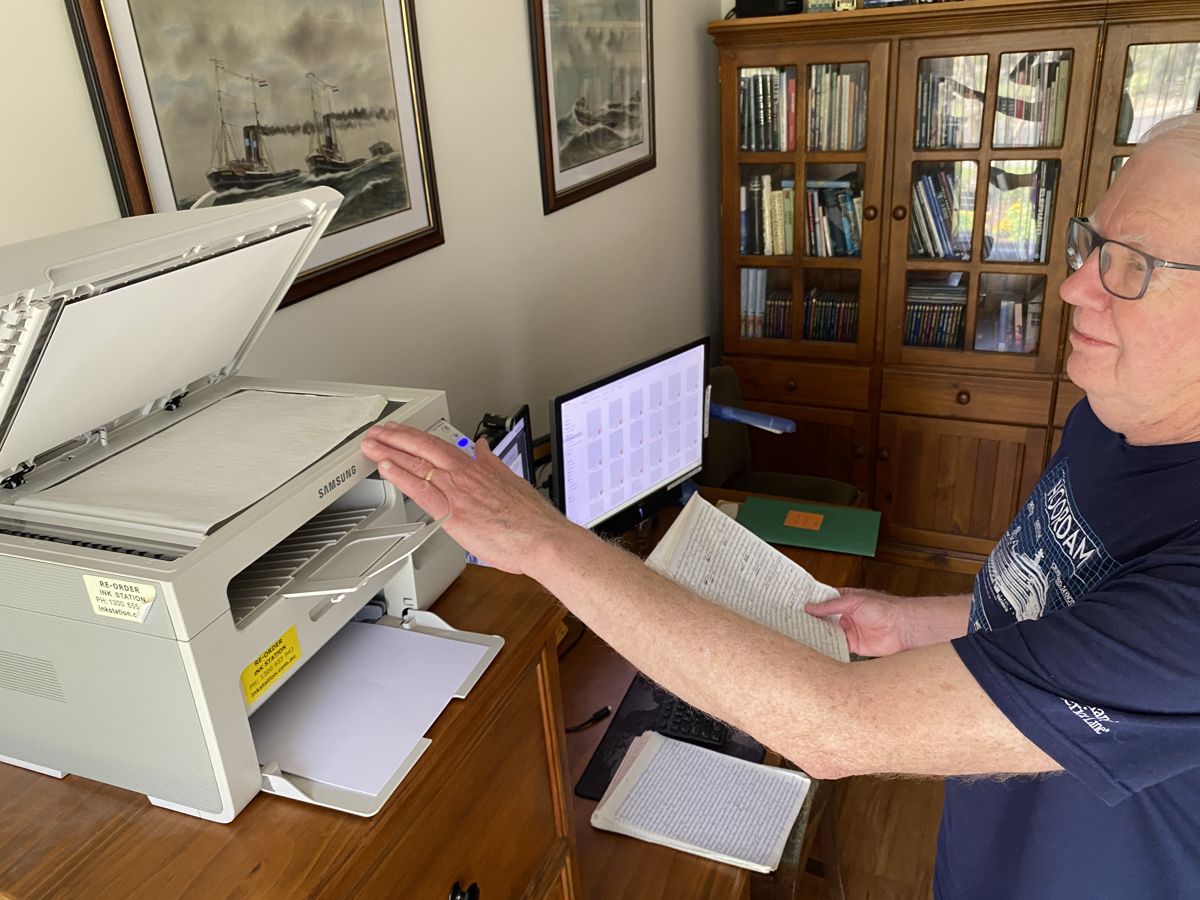
In Adelaide, Andy scanned Oma’s original Dutch handwriting into cloud storage, patiently, one page at a time, until all of it was there.
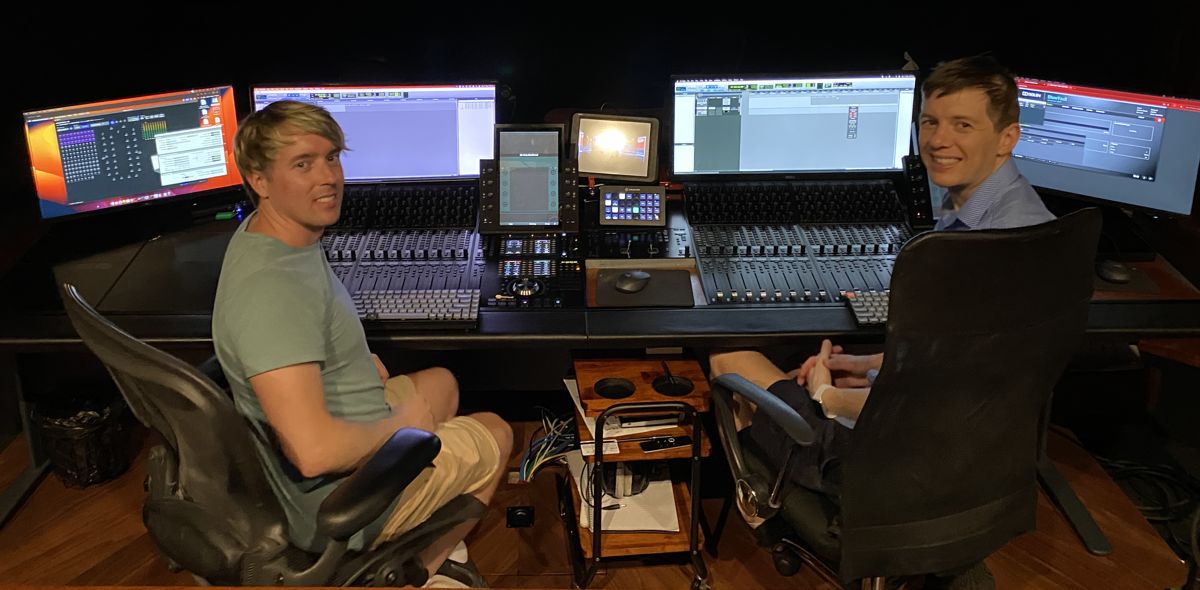
In Perth, Nicholas put those scans to Claude, an artificial-intelligence platform, ten pages at a time, with further agents giving an independent second opinion on anything hard to read, and more agents reviewing the work behind them.
Claude also researched the world behind the pages, so that a reader today can follow things that needed no explaining in her own day: the herring fishery, the war years, what things cost, the institutions she names. Every note of that kind was checked against sources, or left unwritten.
Yvonne and Andy answered dozens of questions the agents raised as they read: a name, a date, who somebody was, where a house stood. Much of the context now carried in the notes and the appendix came from those answers.
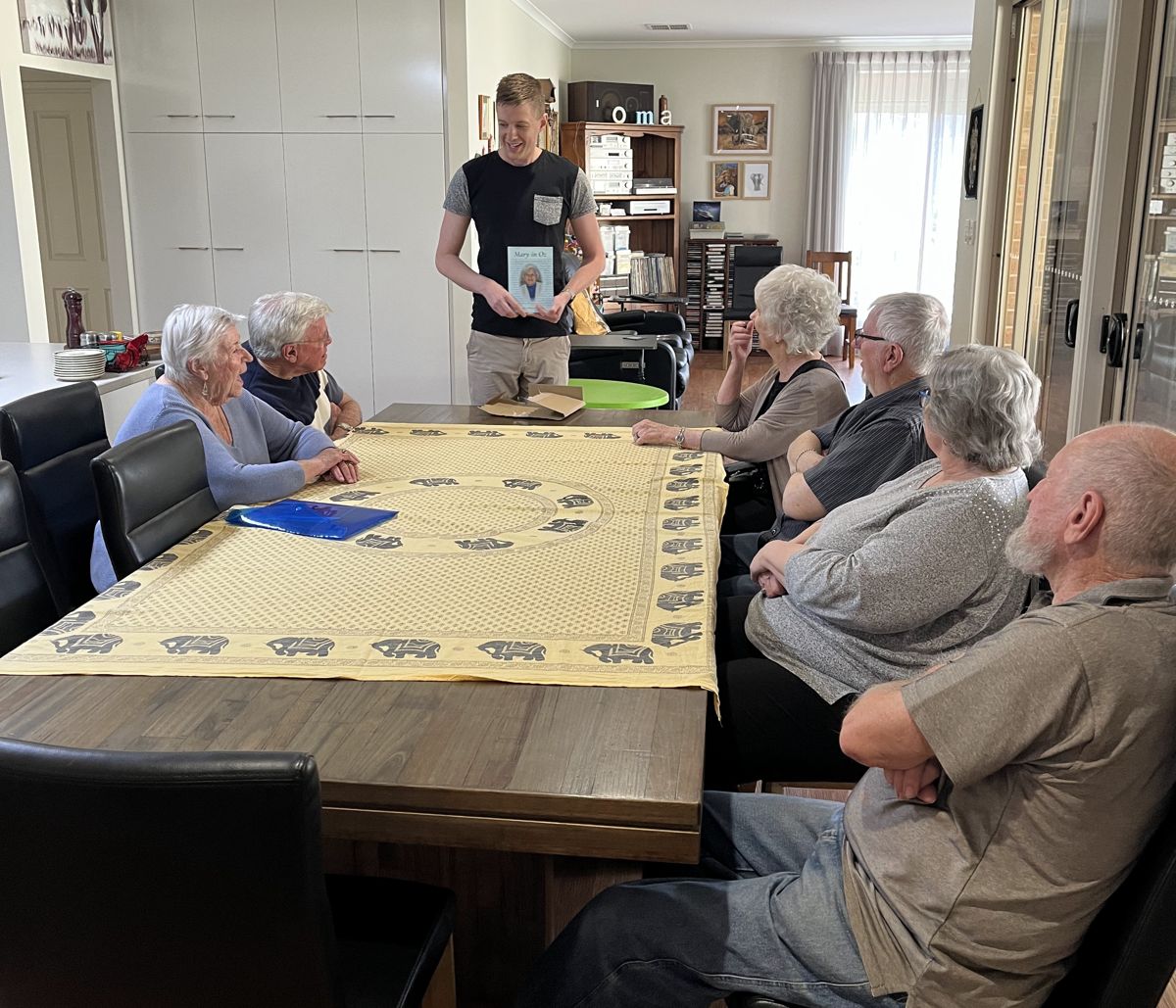
Samuel and Nicholas edited the book between them, settled its layout and design, and prepared the files to the printing house’s specification, which is what made it a physical thing to hold.
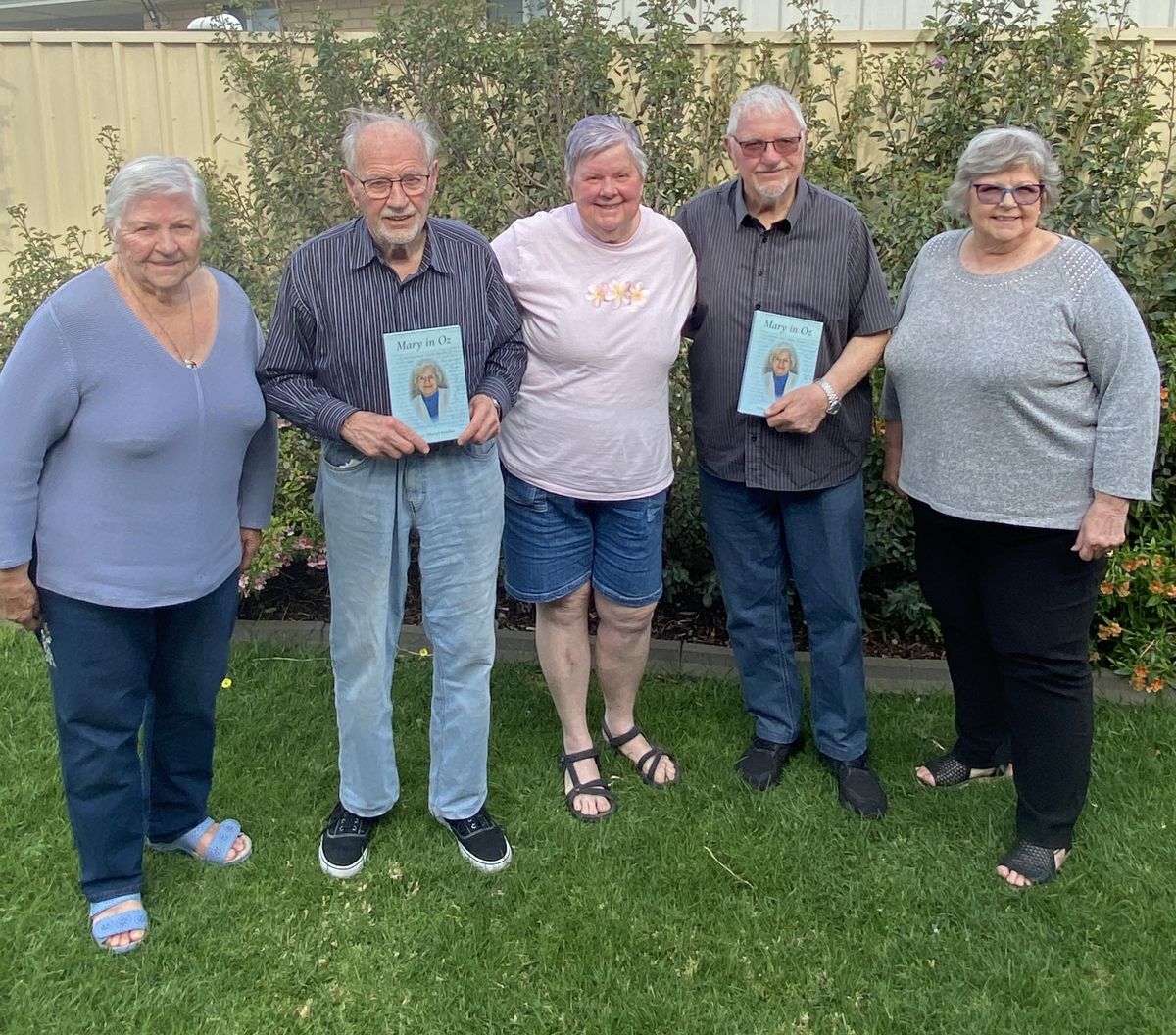
Preserving this work, and letting Mary’s story be told in full again, has been a rewarding thing to do. We hope that in these pages the family hears her voice again, telling her own life in her own words.